PDF Ebook Fall of the Roman Republic (Penguin Classics)
As known, experience and experience about lesson, enjoyment, as well as knowledge can be acquired by just checking out a book Fall Of The Roman Republic (Penguin Classics) Even it is not directly done, you could recognize even more about this life, about the world. We offer you this appropriate and very easy method to gain those all. We provide Fall Of The Roman Republic (Penguin Classics) and also lots of book collections from fictions to scientific research in any way. Among them is this Fall Of The Roman Republic (Penguin Classics) that can be your partner.
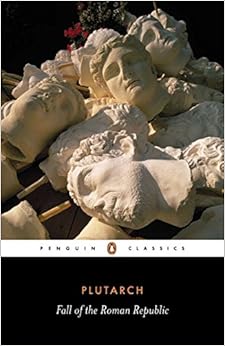
Fall of the Roman Republic (Penguin Classics)

PDF Ebook Fall of the Roman Republic (Penguin Classics)
Have you heard that reading can stimulate the brain to work well? Some people truly think keeping that situation. However, many individuals likewise include that it's not regarding analysis. It has to do with just what you could take the message as well as impression of guide that you review. Well, why can you think by doing this? But, we make certain that reading by practice and also smart could make the visitor reviewed it quite possibly.
By investing couple of times in a day to read Fall Of The Roman Republic (Penguin Classics), some experiences as well as lessons will be acquired. It will not associate with just how you ought to or take the tasks, but take the benefits of how the lesson and also impact t get. In this situation, this provided book truly becomes ideas for individuals as you. You will always need brand-new experience, won't you? However, often you have no enough time and money to undertake it. This is why, with this book, you could conquer the willingness.
When reading this publication regularly, you can get tired. Yet, you could make a good way by reading it little however, for certain. After a long time, you could lowly appreciate guide analysis very well. By curiosity, you will certainly have eager greater than the others. This Fall Of The Roman Republic (Penguin Classics) is available to offer in soft file as well as published. And below, just what we will certainly reveal you are the soft file of this boo.
read. Why? One more time, this is so appropriate with the subject that you actually need now. It will also make your option of the day to fill up the time by reading this publication. Even it is a sort of soft data forms, Fall Of The Roman Republic (Penguin Classics) content will certainly not be various with the print out of guide.
About the Author
Plutarch (c.50-c.120 AD) was a writer and thinker born into a wealthy, established family of Chaeronea in central Greece. He received the best possible education in rhetoric and philosophy, and traveled to Asia Minor and Egypt. Later, a series of visits to Rome and Italy contributed to his fame, which was given official recognition by the emperors Trajan and Hadrian. Plutarch rendered conscientious service to his province and city (where he continued to live), as well as holding a priesthood at nearby Delphi. His voluminous surviving writings are broadly divided into the "moral"works and the Parallel Lives of outstanding Greek and Roman leaders. The former (Moralia) are a mixture of rhetorical and antiquarian pieces, together with technical and moral philosophy (sometimes in dialogue form). The Lives have been influential from the Renaissance onwards.
Read more
Product details
Paperback: 464 pages
Publisher: Penguin Classics; Revised edition (April 25, 2006)
Language: English
ISBN-10: 0140449345
ISBN-13: 978-0140449341
Product Dimensions:
5.2 x 0.8 x 7.8 inches
Shipping Weight: 11.4 ounces (View shipping rates and policies)
Average Customer Review:
4.0 out of 5 stars
34 customer reviews
Amazon Best Sellers Rank:
#361,377 in Books (See Top 100 in Books)
Plutarch is the opposite of Isaaic Asimov. Foundation portrays history only in terms of massive predictable, quantifiable and eminently understandable trends. There is little accounting for individual personalities; only stochastic movements of people, information, money, and resources. On the other hand, Plutarch writes history in the form of biographic essays, showing us one unique, sometimes inconsistent, often inscrutable man at a time.Six Lives was written 150 years after the fall of the Roman Republic, and gives the reader a feel for six top leaders of the Republic. I think they help show that while the Empire was sexier than the Republic, the Republic may have more to teach us... It's history is the cautionary tale of a prosperous, learned society with codified rights (for some), and elements of representative governance, which proceeded down a path to dictatorship. Some understanding of how this happened may be gleaned from the six lives Plutarch examines:GAIUS MARIUS parlays success as a General into a legendary political career, becoming the first man to be elected Consul seven times. He is responsible for the slaughter on the Capitoline Hill, demonstrating an arrogance and ruthlessness which makes him plenty of enemies and few friends. He spends his last few unhealthy years fleeing political rivals and seeking sanctuary wherever he can find it, much as Mohammad Reza Pahlavi "the Shah of Iran" did in 1979. I'm not sure why Gaius was included on this list; he seems the less impressive than the others.SULLA is a little Roman Joseph Stalin. Turning on the public who elected him Consul, he maneuvers himself into a position of Dictator, and then proceeded to butcher over 12,000 citizens, political opponents, personal enemies and their families for the slightest real or perceived transgressions. Through sheer dumb luck, Sulla was asked to receive the surrender of notorious outlaw Jogurtha on behalf of Rome. Sulla hadn't contributed anything to Jogurtha's defeat and capture, but that didn't stop him from commissioning statues in Rome depicting him standing triumphally over the humbled outlaw. His peers were particularly miffed by a giant gold ring he had custom made, bearing the surrender scene. I guess he wore it under their noses, like bad bad LeRoy Brown. That must have been some outrageous piece of jewelry, to get mention Plutarch`s book, written 150 years later! I wish somebody who saw it would have drawn a picture! Sulla died, incidentally, of a gruesome intestinal worm infestation. (Ascaris??)CRASSUS (Triumvir #1) is best known as the General who defeated Spartacus, and in his day: the richest man in Rome. His for-profit fire company used to show up at burning homes to negotiate a bargain sale of the house. If the owner refused, the firemen turned around and went home! He comes across as the weakest of the Triumvirs, with no realistic shot at coming out on top over Pompey or Caesar. Brutal ending for Crassus: a beheading when his military adventures in Parthia go bad.POMPEY (Triumvir #2) is the military strategy whiz-kid, who becomes General at twenty-two, and gets his own Triumph (victory parade) without the normally required rank of Praetor. His career as statesman is less impressive. When Crassus's death ends the Triumvirate, the Republic descends into civil war. Pompey snatches defeat from the jaws of victory, and loses to Caesar. Shortly after, he seeks asylum in Egypt, and is murdered by King Ptolmey's agents, in an example of cold-blooded Machiavellian politics which Plutarch explains well on page 239. Side note: while reading this section, I couldn't help feeling Pompey's nemesis, the renegade king Mithridates, was a much more intriguing personality.CAESAR (Triumvir #3) is the best known of these men, so I won't elaborate. No matter; there is so much overlap of events in the personal histories of Crassus, Pompey, and Caesar, that reading them in succession starts to feel a bit like Rashomon. If you have read Shakespeare's Julius Caesar, and the preceeding chapters on Crassus and Pompey, this section has little new to offer.CICERO is the lone intellectual of the group. It's nice to know that political power wasn't completely limited to generals, but Cicero wasn't nearly as powerful as the others on this list. I like him better in his own work: On the Good Life Penguin Classics. Plutarch thinks Cicero is a too-clever-by-half smartass, but does grudgingly admit his brilliant oratory skills, and his impressive legal career. Sadly, Cicero's life illustrates that being right or just or smart was not enough to ensure the public's goodwill during the Republic. Without question, military might ruled the day.Parting Advice1) Get a good Atlas of the Roman World for reference when you read this. There are plenty of places mentioned in this book, and no maps. This is a setup for much confusion: what the Romans called "Albania" is in present-day Georgia, while what we now call "Albania", the Romans called Dyrrhachium; what the Romans called "Iberia" is in present-day Armenia... etc.2) If you go to Rome, be sure to seek out some of the ruins of the Republic: Temple of Hercules Victor, and the Temple of Portunus.
Plutarch was a classical Greek historian during the Roman period who was well rounded and provides us with important insights into the classical world through his writings. Most important among these writings are the extensive biographies he wrote of important individuals from Greece and Rome. Some of his sources are now lost to us, but the tales live on.This particular collection is a set of six biographies of individuals set in the late Republic: Gaius Marius (who instituted various military reforms which probably doomed the Republic), Sulla (the first to enforce a dictatorship over the republic through civil war), Crassus, Pompey, Caesar, and Cicero. Through these writings we are introduced to religious customs, stories of prophecies, and tangential tales that have in some ways eclipsed the subject of the biography.For example, in the biography of Crassus, we are introduced to a fairly full account of the Spartacus War and the appeal of that story during McCarthy-era America among those who were dissenting from McCarthy's rhetoric is obvious.For all of this, the line that stands out in my memory is the popular description of Sulla being that his face was a "mulberry with oatmeal sprinkled on it."Definitely recommended.
Plutarch was a Greek historian who wrote in the 2nd Century AD. This work covers the lives of six key individuals in the twilight of the old Roman Republic from 105-43 BC. Marius and Sulla were soldier-dictators who first sought to gain one-man rule. They were followed by Crassus, Pompey and Caesar. These three lives are the best in the book. The final life is Cicero, the lawyer. There is good military detail on Marius' defeat of the Cimbri, Crassus' defeat at Carrhae and Caesar's triumph at Pharsalus. The Mithraditic Wars in Asia minor are important but difficult to follow due to the lack of any maps. There are no great lessons here, other than the eternal struggle for power. The editor was lazy in this book and should have provided a glossary of key individuals, since there are too many individuals with similar names. There are also no maps - a major flaw.
The selection of lives in this book is not quite as good as those in Makers of Rome, but it does have Pompey the Great and Julius Caesar, so it's worth reading for those alone. The rest are also interesting, just not as interesting after having read the other book.
thanks
Caesar's genocide in France was despicable. Good read!
Cant go wrong with the classics.
Excellent insight on the reasoning behind the multiple decisions of powerful men that led to the collapse of a society that had inexplicable potential.
Fall of the Roman Republic (Penguin Classics) PDF
Fall of the Roman Republic (Penguin Classics) EPub
Fall of the Roman Republic (Penguin Classics) Doc
Fall of the Roman Republic (Penguin Classics) iBooks
Fall of the Roman Republic (Penguin Classics) rtf
Fall of the Roman Republic (Penguin Classics) Mobipocket
Fall of the Roman Republic (Penguin Classics) Kindle
Fall of the Roman Republic (Penguin Classics) PDF
Fall of the Roman Republic (Penguin Classics) PDF
Fall of the Roman Republic (Penguin Classics) PDF
Fall of the Roman Republic (Penguin Classics) PDF

This post was written by: Author Name
Your description comes here!

Posting Komentar