Ebook Free Illness That We Are, The (Studies in Jungian Psychology by Jungian Analysts), by John P. Dourley
Reviewing publications will certainly not obligate you to complete it in a day. After your analysis book now, Illness That We Are, The (Studies In Jungian Psychology By Jungian Analysts), By John P. Dourley can be the picked publication to be. We recommends due to the top quality of this book. It showcases something new and also different. You may not have to believe significantly, yet simply read and also you will see why this publication is much suggested.
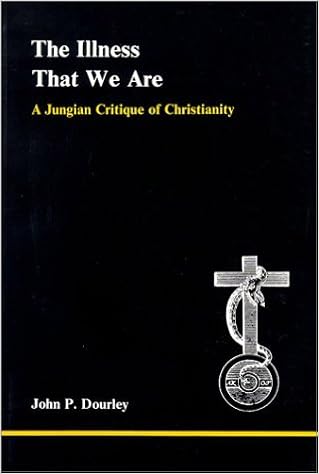
Illness That We Are, The (Studies in Jungian Psychology by Jungian Analysts), by John P. Dourley

Ebook Free Illness That We Are, The (Studies in Jungian Psychology by Jungian Analysts), by John P. Dourley
Million advantages of book can be taken all if you don't just possess it as yours. It will occur when you read the book, page by web page, to finish. Besides, read it extremely well can assist you to reduce getting the lesson. The lesson as well as advantages of the books as we states could be numerous. You are most likely not conscious that just what you feel and also do now come to be some parts of reading benefits of such book formerly.
The means of exactly how this book is presented in this site associates a lot with that we are. This is an internet site, a much referred site that gives great deals of publications, from earliest to latest released, from simple to difficult books, from a nation to other nations in the world. So, it's not that variety if Illness That We Are, The (Studies In Jungian Psychology By Jungian Analysts), By John P. Dourley is offered here. You recognize, you are among the lucky people that locate this internet site.
Even this publication is made in soft file kinds; you can enjoy reading by obtaining the data in your laptop, computer system device, and also gadget. Nowadays, reading doesn't end up being a standard task to do by specific individuals. Many individuals from lots of areas are always starting to review in the early morning and every leisure. It shows that people currently have big curiosity as well as have huge spirit to review. Additionally, when Illness That We Are, The (Studies In Jungian Psychology By Jungian Analysts), By John P. Dourley is released, it ends up being a most wanted book to buy.
When you require also the various other publication category or title, discover the book in this website. One to keep in mind, we do not only offer Illness That We Are, The (Studies In Jungian Psychology By Jungian Analysts), By John P. Dourley for you, we additionally have numerous lots of guides from lots of collections the whole globe. Envision, just how can you get guide from various other nation quickly? Just be here. Simply from this internet site you could find this condition. So, simply accompany us now.
Book by Dourley, John P.
Read more
Product details
Series: Studies in Jungian Psychology by Jungian Analysts (Book 17)
Paperback: 128 pages
Publisher: Inner City Books; F First Edition Used edition (January 31, 1984)
Language: English
ISBN-10: 0919123163
ISBN-13: 978-0919123168
Product Dimensions:
6 x 0.5 x 8.8 inches
Shipping Weight: 4.8 ounces (View shipping rates and policies)
Average Customer Review:
5.0 out of 5 stars
3 customer reviews
Amazon Best Sellers Rank:
#1,067,409 in Books (See Top 100 in Books)
Being inclined to distrust institituions that demand adherence to authority, this review of the historical and psychological abuse of the rich biblical resources is welcome and encouraging. Some may find it abhorrent. I would expect that from one who does not have a reflective view of life in all aspects. If God is true, and I know God is true in my own life, what is the worry about focus on rigidity and right believing? We have failed to enact the story and in that failure we have become rigid in our thinking to compensate for the absence of the spirit in all things.
This little book -less than 120 pages long- is a jewel by any standard. I have to say I was raised as a Roman Catholic however convinced as an adult that Christianity has become an empty shell, being in the process of irreversible decay despite some sincere commitments of many of its adherents worldwide. Not that this book, written by a RC priest, changes this sad impression on me rather the surprise consists in discovering it contains a lucid explanation on why Christianity has arrived at this deteriorated stage. The book title "The Illness that We Are" refers to organized, institutional religions, pastors an vicars included whom, instead of recognize divinity and the focal point of their cult as a deep shared psychic /psychological feature embedded in human experience of the self, place both divinity and its focal point (the figure of Christ in this case) as an historical transcendent events exogenous to humanity, splitting once and for all the human and the divine and in doing so pushing the community of believers to live a kind of schizophrenic existence (my words, not Dourley's) where reason and faith are locked in a never ending battle. Reform Christianity with its distrust of symbols and rationalistic propensity sooner or later give way to science and scientism, conceding both the upper hand and finally surrender to a grammar that they master better than a religious movement tilted to a more secular, earthly orientation (no wonder -I must add- that nowadays there is a surge in Anglophone countries of "let's deconstruct God literature" supported by writers akin to scientism -such as Dawkins or Dennett- more likely to win a decisive battle because the terms of the debate are at their side). Roman Catholicism in the other hand, with a theological tradition where Aquinas weights more than St. Augustine, has lost profundity and introspection, and in that extent forgot the immanent nature of its symbols, to the point that they have become meaningless and almost impossible to reconcile with the modern mind; insisting that those symbols have to do more with an external, transcendent reality than with a deep human physic dynamics, RC has become the taxidermist of those symbols, taking away both its life and its truth because has forgotten where they come from: an everlasting wellspring hidden in the shared unconscious of human nature. That's why John P. Dourley takes the deep insights of Jung on the subject as a vehicle to make a diagnosis on the conundrums that Christianity faces. However this lucid analysis does not stop here, because Dourley realizes that any religion -specially those monotheistic ones, including of course Judaism and Islam- placing all the stakes on transcendence and revelation are trapped in an overemphasis on faith in the same extent they dismiss human psychic life, taking the path of violence as an option, acting as a source of irreconcilable division amongst human beings or propelling their followers and vicars to more neurotic, dangerous behavior because are compelled to accept an alien truth at the same time they have to quit theirs: the very experience of their self. This is remarkable considering the book was written in the mid eighties, well before 9-11, Gaza or pedophilic catholic priests' scandals going public, hence The Illness That We Are. Moreover in a bold move John P. Dourley envisions that all the main world religions are in a point where they hinder human spirit maturity so maybe the best way to treasure their legacy and teachings is to overcome them in a more encompassing search of the human identity, with all her contradictions, in order to reach a higher level of conscience and meaning. What Dourley is speaking about is not mere a philosophical anthropology desiderata because those contradictions point out beyond human kind to something deeper and alive that through human drama strives to self understanding. A religious man or woman may call this The Divine, Schopenhauer The Will or cosmic blind, wild thrust in need of affirmation, psychoanalysis the Unconscious, Jung The Self acting upon our species through archetypes or built in configurations of the psyche, in any case something unfinished and charged with both light and shadow that not fits in our one sidedness and limited conceptualizations, begetting myths in the human psyche as the only way so far to assert its contents and inner struggle. Well I'm just a modest economist, not a theologian, but I wouldn't be surprised if the author of this book felt under suspicion of heresy by both colleagues and superiors; however I think in the extent they are some heretics like John P. Dourley there is a sign of health within the religious community, that there is some hope, that not everything is lost. Kudos for this brave thinker!Highly recommended also and in the same collection is Edward Edinger's "Creation of Consciousness: Jung's Myth for Modern Man" and of course Jung's classic "Answer to Job": both slender books nevertheless containing a critical mass of thought ready to blow away any preconception at the time they cast a different light on our religious heritage.
This book is even more relvant today than it was when published. It is somewhat a leap of faith (Jungian faith) to accept the notions in the book, however, the current spiritual and religious crises tend to reinforce whatthe author talks about.
Illness That We Are, The (Studies in Jungian Psychology by Jungian Analysts), by John P. Dourley PDF
Illness That We Are, The (Studies in Jungian Psychology by Jungian Analysts), by John P. Dourley EPub
Illness That We Are, The (Studies in Jungian Psychology by Jungian Analysts), by John P. Dourley Doc
Illness That We Are, The (Studies in Jungian Psychology by Jungian Analysts), by John P. Dourley iBooks
Illness That We Are, The (Studies in Jungian Psychology by Jungian Analysts), by John P. Dourley rtf
Illness That We Are, The (Studies in Jungian Psychology by Jungian Analysts), by John P. Dourley Mobipocket
Illness That We Are, The (Studies in Jungian Psychology by Jungian Analysts), by John P. Dourley Kindle
Illness That We Are, The (Studies in Jungian Psychology by Jungian Analysts), by John P. Dourley PDF
Illness That We Are, The (Studies in Jungian Psychology by Jungian Analysts), by John P. Dourley PDF
Illness That We Are, The (Studies in Jungian Psychology by Jungian Analysts), by John P. Dourley PDF
Illness That We Are, The (Studies in Jungian Psychology by Jungian Analysts), by John P. Dourley PDF

This post was written by: Author Name
Your description comes here!

Posting Komentar